Hungarian elections explained II.
In Hungary we are slowly closing to the 2026 parliamentary elections, which will be in April. We would like to help you understand it better.
In the coming months, we would like to introduce the Hungarian electoral system and the unique environment of the elections in Hungary. Sometimes even Hungarians find the system confusing.
We would like our European environment to understand a little better what is happening in our country. This way, hopefully, our story will reach more people.
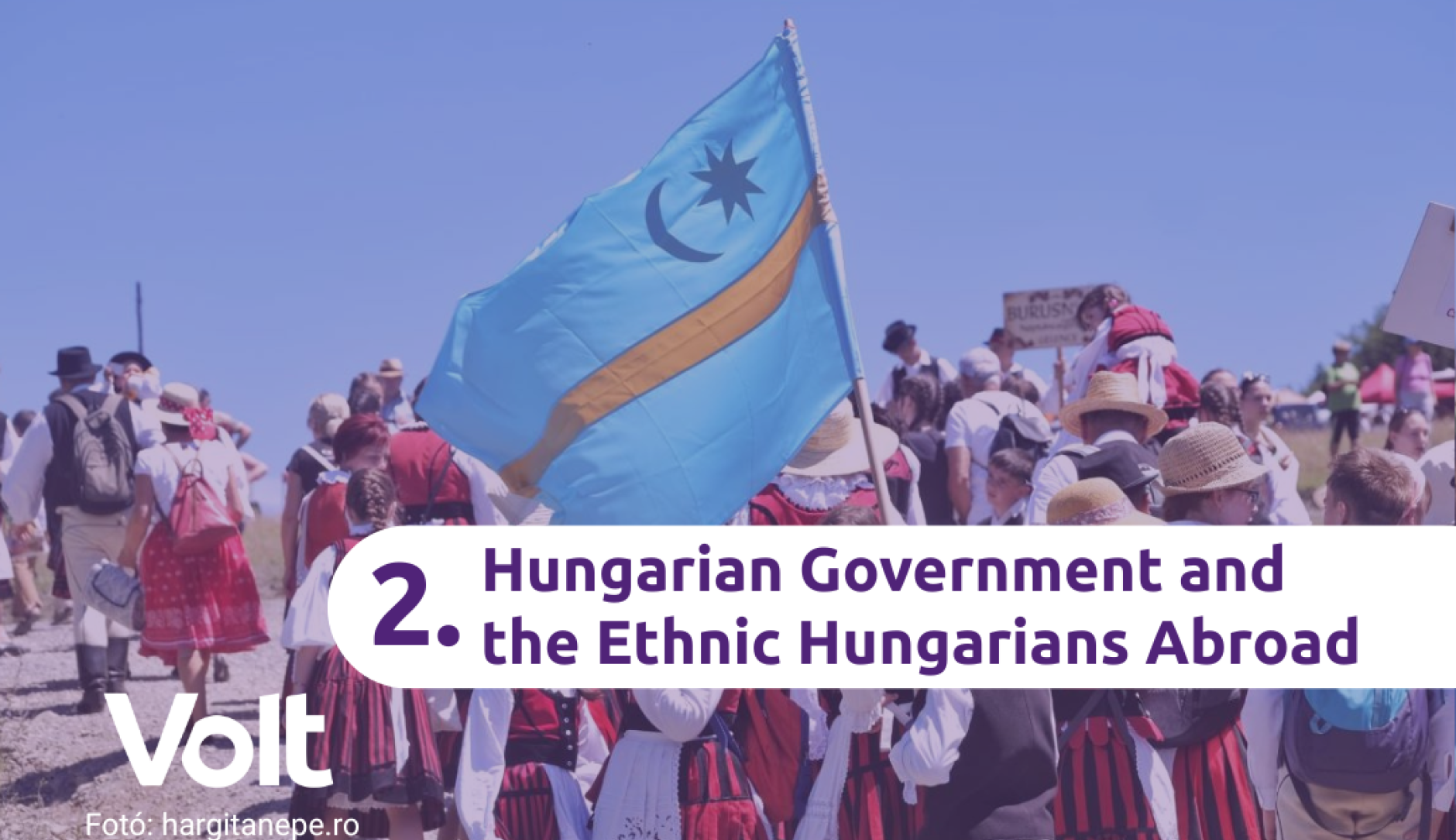
In this article, we describe the financial support provided by the Hungarian Government to Ethnic Hungarians Living Abroad, which is relevant in the political context related to the elections.
The Hungarian government provides a range of financial support measures to ethnic Hungarians living outside Hungary, including individuals with dual citizenship (for example, Slovak, Romanian, Serbian, or Ukrainian citizens who also hold Hungarian citizenship). These policies are officially intended to strengthen cultural, social, and institutional ties with Hungarian communities beyond Hungary’s borders.
At the same time, these programs operate in a political context in which Hungarian citizens abroad are entitled to participate in Hungarian parliamentary elections, and the measures are widely viewed as the real goal is reinforcing political support for the governing Fidesz among the diaspora by hidden propaganda in these support programs.
1. Direct Financial Support for Children
1.1 One-Time Maternity Allowance
Since 2018, ethnic Hungarian children born abroad (including in Slovakia, Romania, Serbia, Ukraine, Croatia, and other neighboring countries) may qualify for a one-time maternity allowance (anyasági támogatás).
Amount: approximately HUF 64,125 (around EUR 160) per child
Eligible claimant: the mother, adoptive parent, or legal guardian
Application deadline: within six months of the child’s birth
Eligibility requires proof of Hungarian citizenship and the relevant civil documentation (e.g. birth certificate).
1.2 Baby Bond (Babakötvény)
In addition to the maternity allowance, each eligible child may receive a Baby Bond (babakötvény):
Initial deposit: HUF 42,500 (approximately EUR 105)
Deposited into a Hungarian Treasury account
Accrues interest until the child reaches the age of 18
These benefits are accessible to Hungarian citizens living abroad, provided the necessary documentation is submitted. Payments are typically made by bank transfer, including to foreign accounts with IBAN identification.
2. Annual Support Linked to Hungarian-Language Education
In recent years, the Hungarian government has also operated annual grant programs aimed at families whose children attend Hungarian-language schools abroad.
Typical grant level: up to HUF 100,000 per child per year (approximately EUR 245–250)
Implemented through country-specific schemes
Most prevalent in Romania, Ukraine, Slovakia, Serbia, and Croatia
These grants are not universal entitlements but are awarded through recurring support programs, often administered via partner institutions or foundations.
3. Country-Specific Eligibility and Conditions
Ukraine
Dual Ukrainian–Hungarian citizens with permanent residence in Hungary are eligible for the full range of Hungarian family support schemes available to residents of Hungary.
Those residing outside Hungary are generally limited to the one-time maternity allowance and baby bond, unless they establish official residence in Hungary.
Romania, Slovakia, Serbia, and Croatia
Children with Hungarian citizenship born in these countries may apply for both the maternity allowance and the baby bond.
Families whose children attend Hungarian-language schools are, in many cases, eligible for annual education-related grants, with recent levels reaching approximately EUR 245 per child per year.
4. Institutional and Community-Level Funding
Beyond direct family benefits, the Hungarian government provides substantial institutional funding through the Bethlen Gábor Fund. This funding supports:
Hungarian-language schools
Churches
Cultural organizations
Sports and youth programs
Broader community development initiatives
These grants represent a significant share of Hungary’s cross-border national policy spending and operate across all neighboring states with sizable Hungarian minorities.
5. Political and Social Context
These financial benefits and institutional grants are widely interpreted as instruments for building and maintaining political support among Hungarians living abroad. On paper, the purpose of these programs and grants is to help diasporas preserve Hungarian culture, but often their real goals are to promote the Orbán government and its policies in these communities. As Hungarian citizens, members of the diaspora are entitled to vote in Hungarian parliamentary elections, primarily via postal voting.
The Hungarian government has invested hundreds of millions of euros in these combined programs, ranging from individual child-related payments to large-scale educational and cultural projects.
The scope of these measures extends across all major neighboring countries with significant Hungarian minorities: Ukraine, Slovakia, Romania, Serbia, and Croatia.
6. Summary Table
Country | Maternity Grant (per child) | Baby Bond (per child) | Annual School Grant | Other Support |
Ukraine | HUF 64,125 (€160) | HUF 42,500 (€105) | Up to HUF 100,000 | Large institutional grants |
Slovakia | HUF 64,125 (€160) | HUF 42,500 (€105) | Up to HUF 100,000 | Educational & cultural projects |
Serbia | HUF 64,125 (€160) | HUF 42,500 (€105) | Up to HUF 100,000 | School & church support |
Romania | HUF 64,125 (€160) | HUF 42,500 (€105) | Up to HUF 100,000 | Extensive community funding |
Croatia | HUF 64,125 (€160) | HUF 42,500 (€105) | Up to HUF 100,000 | Similar institutional support |
Figures are approximate and subject to annual adjustment. Eligibility depends on Hungarian citizenship documentation and, for certain benefits, verified school attendance.
7. Key Points
The one-time maternity allowance and baby bond are broadly available to ethnic Hungarian children born abroad who acquire Hungarian citizenship.
Annual education-related grants are targeted specifically at families enrolling their children in Hungarian-language schools in neighboring countries.
Together, these programs form a central pillar of Hungary’s diaspora policy and contribute to sustained political engagement among dual citizens.
8. Special Grant for Ethnic Hungarian Teachers in Ukraine
In addition to child- and family-related benefits, the Hungarian government has, since 2018, provided a direct annual grant of HUF 500,000 per teacher to ethnic Hungarian educators in Ukraine’s Zakarpattia (Transcarpathia) region.
No equivalent, universal annual cash payment exists for ethnic Hungarian teachers in other neighboring countries.
Elsewhere, teacher support is typically indirect, project-based, or institutional.
This Ukraine-specific measure is administered through Hungarian consular channels and the Bethlen Gábor Fund.
The explicit objective of this program is to retain Hungarian-language education and teaching staff under difficult local conditions. In the broader context of Hungary’s cross-border education and family support policies, the annual HUF 500,000 teacher payment represents a unique and exceptional measure, limited to Ukraine.